
Visual essay · From the archive
19 October 2026 · Long Record Labs
Start with what you can see.
A hillside. A water’s edge. A few stems. Each gives the eye a different place to begin.
AI-generated illustrations from an earlier LRL website. Visual exercises, not field records.
A scene can feel familiar before we have looked at its details. These three images offer a small exercise: notice a shape, follow a boundary, then ask what remains outside the frame.
Choose “Explore the scene” to use the magnifier and find the small numbered points. Each point opens a short observation.
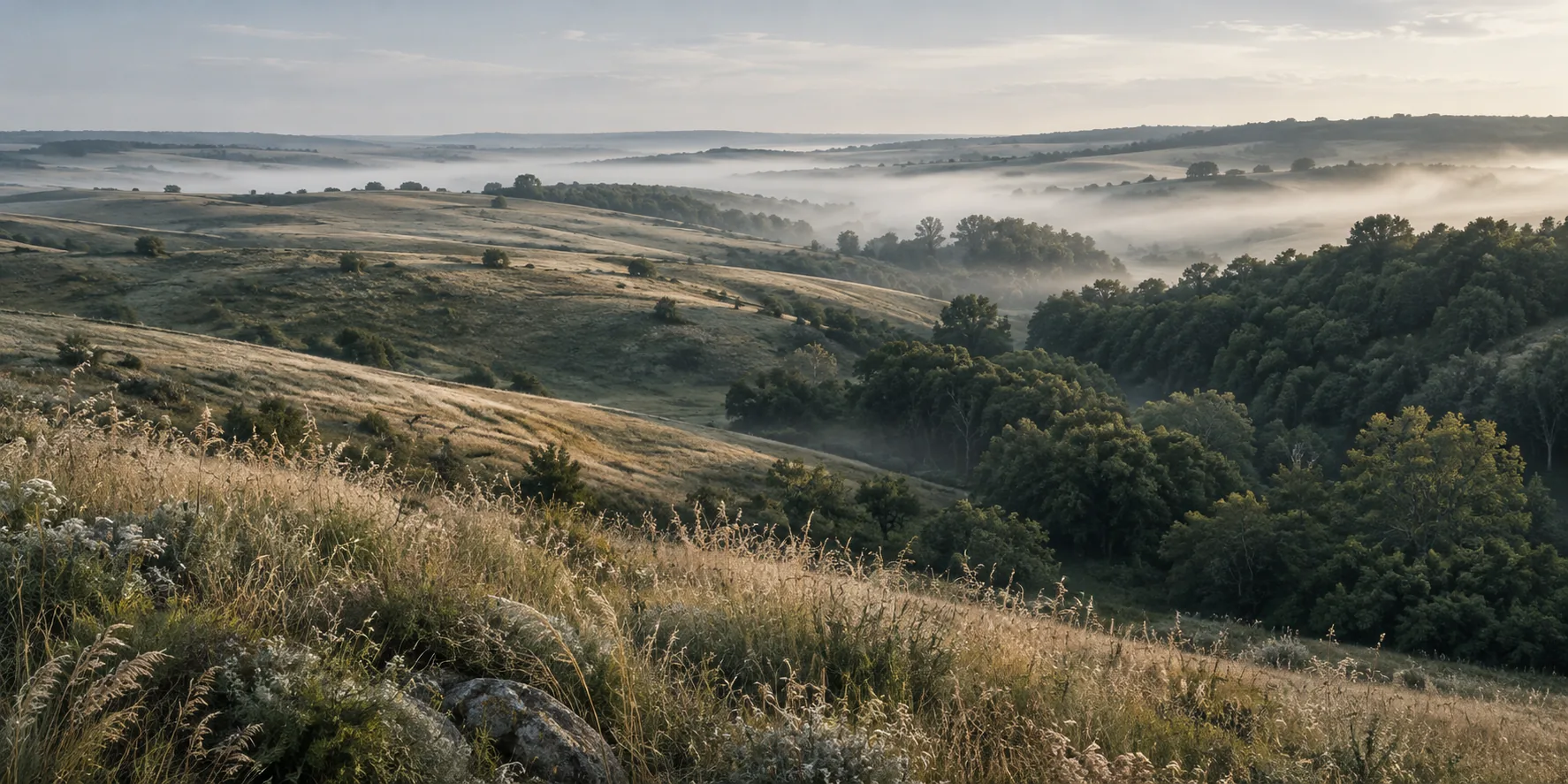
01 / Shape
Follow the ground.
The open hillside and the wooded hollow are easy to read as separate areas. Look along their meeting point. The boundary has a shape of its own.
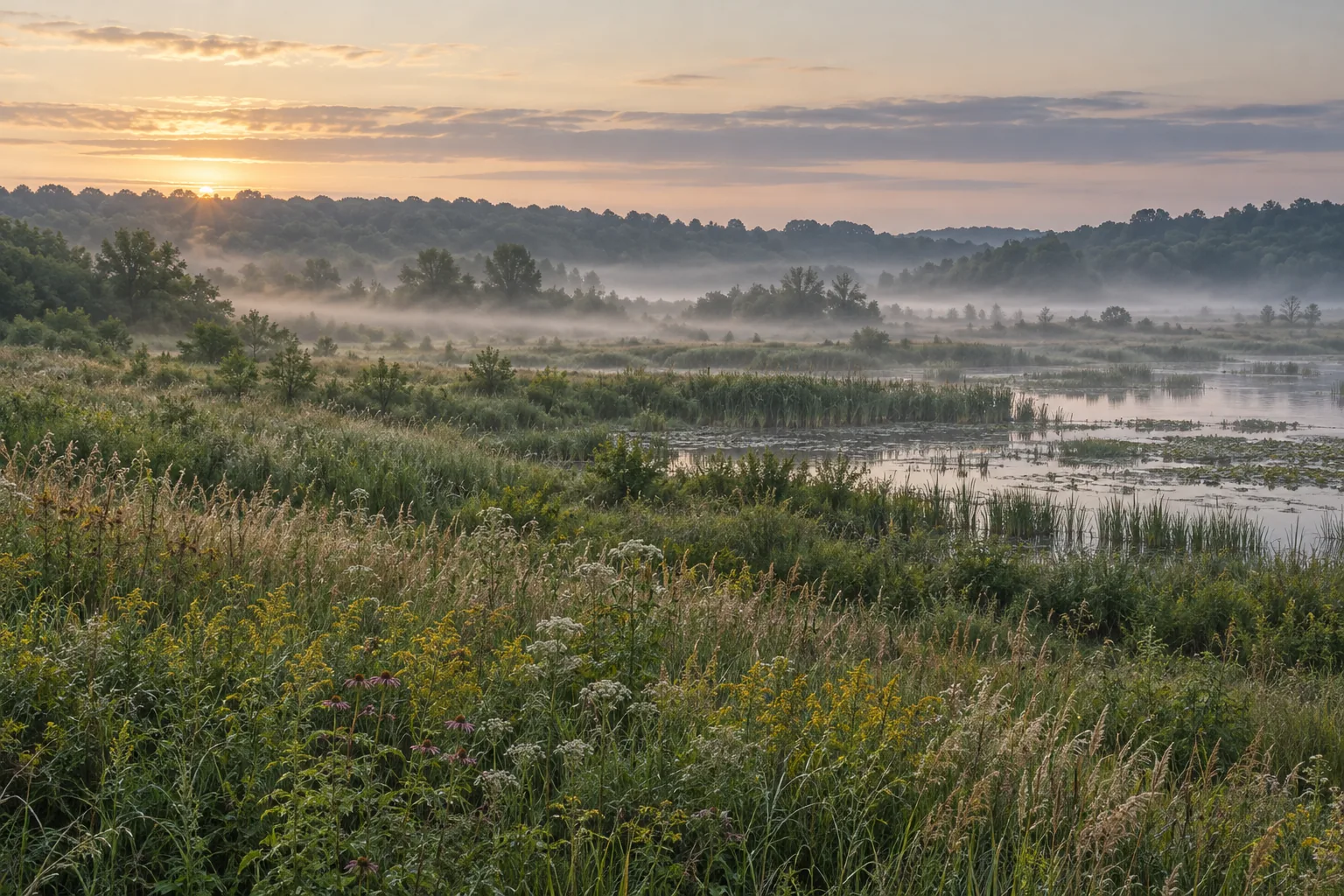
02 / Boundary
Look along the edge.
Open water gives way to upright stems, then denser vegetation. Instead of treating the shoreline as a single line, follow those transitions across the scene.
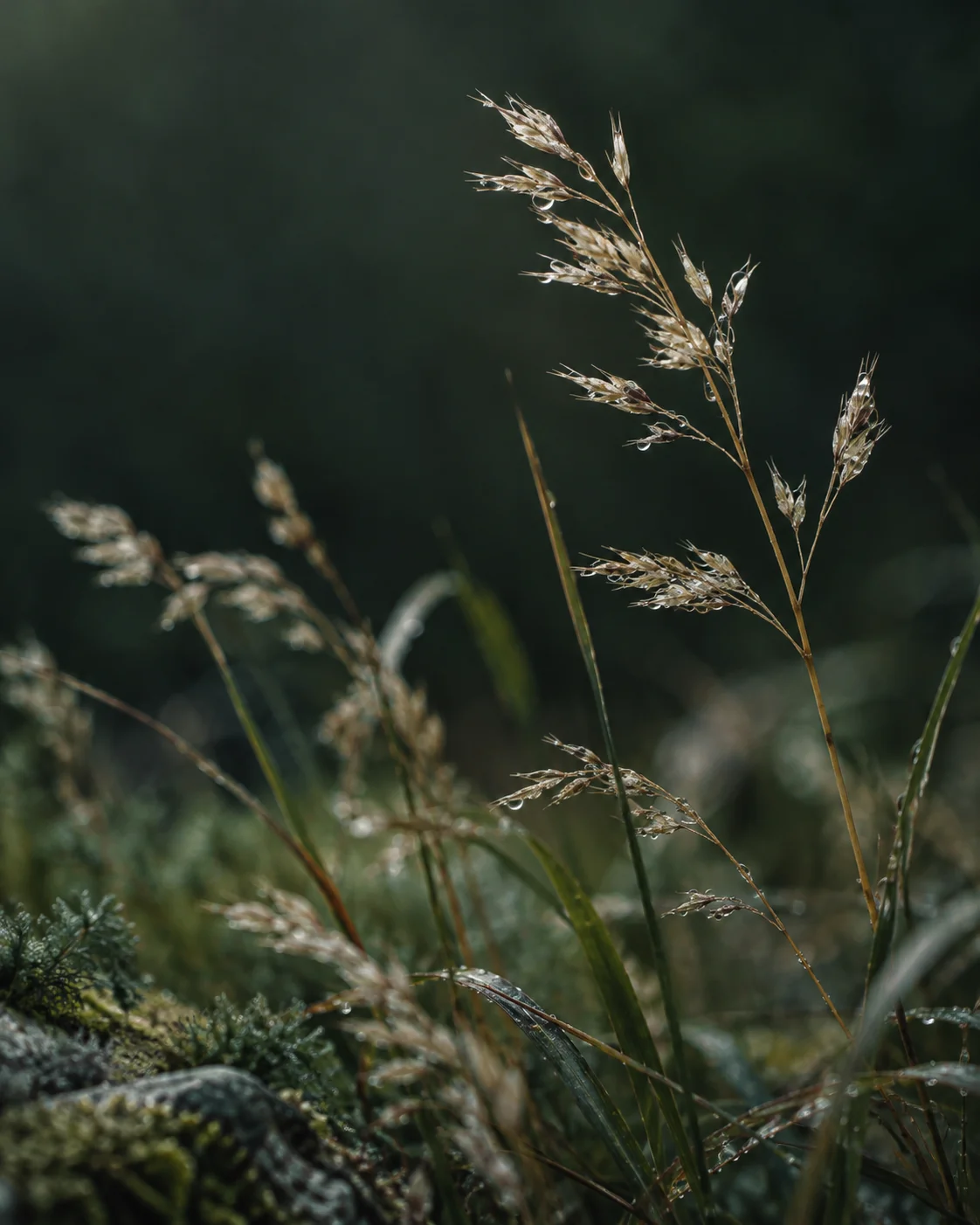
03 / Scale
Let the foreground matter.
The branching stems catch the eye first. Below them is a lower layer of texture, partly softened by the image’s shallow focus.
A close view gives detail more space. It also leaves more of the surroundings unseen.
Turn a detail into a question.
A slope suggests asking where water goes. A boundary suggests asking what changes across it. A small detail suggests moving closer, then stepping back to recover its surroundings.
With a real place, the next step is a record: where you stood, when you visited, what you saw, and what you would check on a return visit. These illustrations are prompts for that attention.